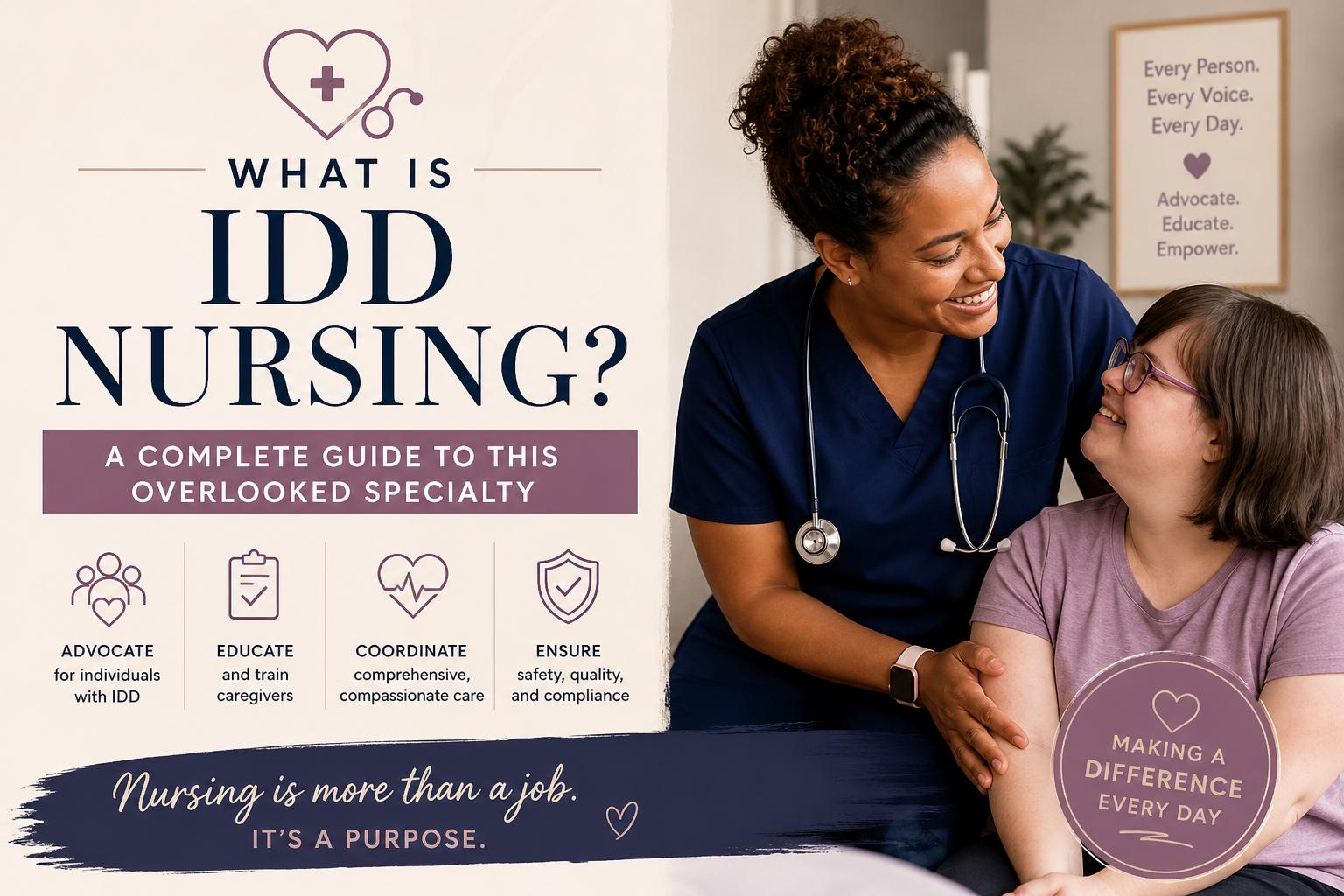
IDD nursing is one of the most misunderstood—and often undervalued—specialties in healthcare.While hospital roles tend to get the spotlight, nurses working with individuals with intellectual and developmental disabilities (IDD) are responsible for complex, long-term care that directly impacts safety and quality of life.In many settings, IDD nurses are the foundation of:
- Care coordination
- Staff training
- Clinical oversight
What Is IDD Nursing?
IDD nursing focuses on caring for individuals with intellectual and developmental disabilities across the lifespan.This may include individuals with:
- Autism spectrum disorder
- Down syndrome
- Cerebral palsy
- Genetic or neurological conditions
In New York, this work is often tied to OPWDD-regulated settings, where nurses support both clinical care and compliance.
What Do IDD Nurses Actually Do?
IDD nursing is less about rapid intervention and more about:
- Prevention
- Oversight
- Coordination
- Medication Oversight
- Review medication regimens
- Monitor for side effects
- Ensure safe administration
- Train staff on clinical skills
- Conduct competency evaluations
- Reinforce safe practices
Health Monitoring
- Track chronic conditions
- Identify subtle changes from baseline
- Prevent avoidable hospitalizations
- Communicate with providers and pharmacies
- Manage follow-ups
- Advocate for appropriate care
Why IDD Nursing Matters
Individuals with IDD often depend on caregivers for daily support.That means:
The system of care matters just as much as the individual caregiver.Strong nursing oversight helps:
- Prevent medication errors
- Reduce hospitalizations
- Improve quality of life
- Maintain compliance
The Reality: Challenges in IDD Nursing
This role comes with real challenges:
- Covering multiple sites
- Limited time for direct care
- Heavy documentation demands
- Reliance on non-licensed staff
Despite this, IDD nurses remain essential to safe care.
Why DSP Training Is Critical
Because nurses are not present 24/7, DSPs are the front line of care.They are responsible for:
- Medication administration
- Monitoring for changes
- Reporting concerns
Practical Training Resources
If you’re responsible for training staff, having structured tools can save time and improve consistency.👉 Browse IDD nursing resources: https://nursingpotential.etsy.com
What Effective DSP Training Should Include
High-quality training should be:
- ✔ Clear and step-by-step
- ✔ Visual and easy to follow
- ✔ Reinforced with competency validation
- ✔ Consistent across staff
Final Thoughts
IDD nursing is built on:
- Advocacy
- Prevention
- Education
While it may not always be the most visible specialty, its impact is significant—especially in community-based care.
Ready-to-Use Tools for IDD Nurses
Looking for practical resources to support your role?
👉 Explore trainings and tools designed for real-world use: https://nursingpotential.etsy.com