$14.99
Support Safe, Respectful Catheter Care
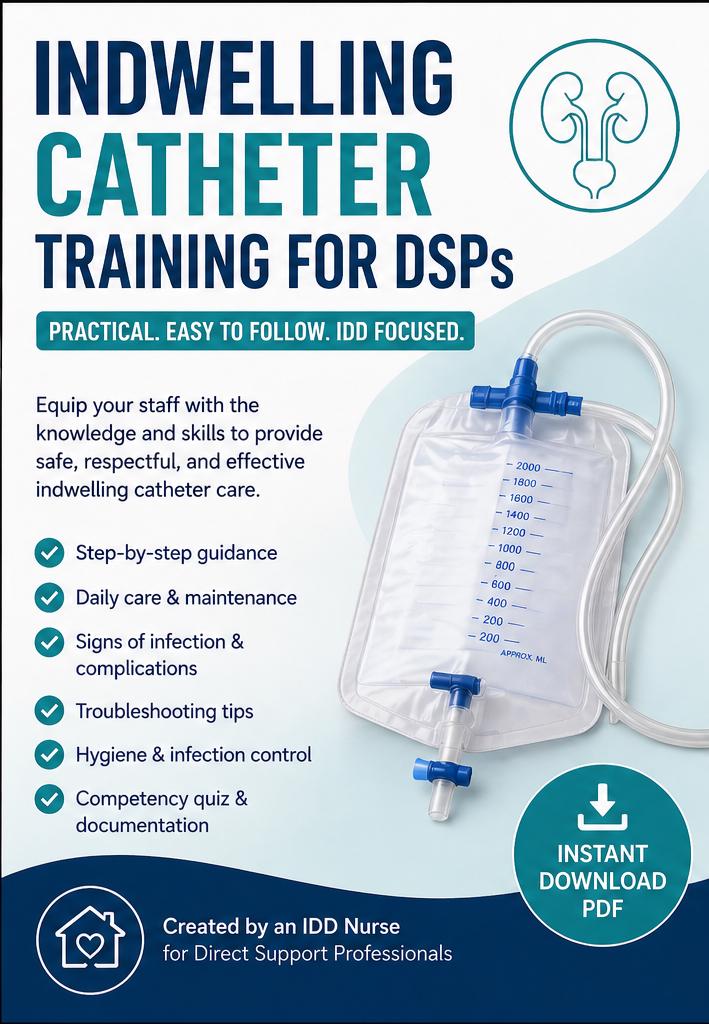
This Indwelling Catheter Training for DSPs provides clear, practical guidance for assisting individuals with urinary catheters in residential IDD settings. Focuses on infection prevention, daily care, and early problem recognition.
Designed for Real-World Use in Group Homes and Day Programs
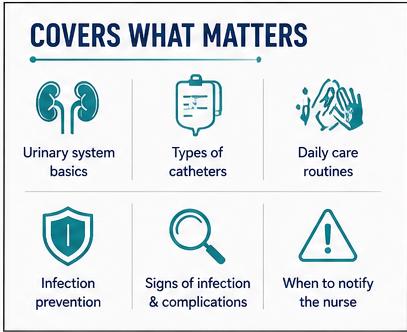
Created by an IDD nurse, this training addresses:
DSP responsibilities vs nursing scope
Dignity and privacy considerations
Real risks seen in residential care
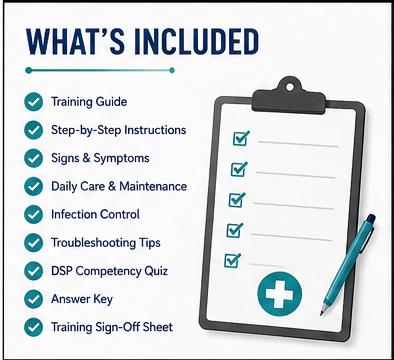
What’s Included (Instant Download PDF)
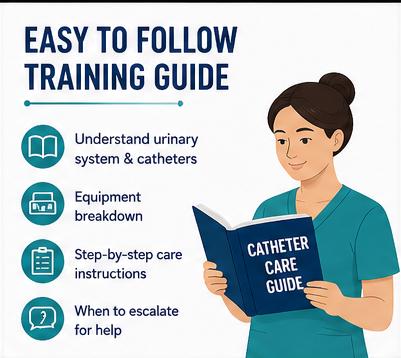
✔️ DSP Training Guide
What an indwelling catheter is
Why individuals may require one
Basic anatomy (simple, DSP-friendly)
✔️ Daily Care & Maintenance
Proper positioning of catheter tubing and bag
Maintaining a closed system
Emptying drainage bags safely
Preventing backflow
✔️ Infection Prevention & Hygiene
Hand hygiene and PPE basics
Perineal care guidance
Reducing UTI risk
✔️ Signs of Infection & Complications
UTI warning signs
Blockage or decreased output
Leakage, pain, or discomfort
When to notify the nurse immediately
✔️ Troubleshooting Guide
Bag not draining
Tubing issues
Individual pulling or tampering
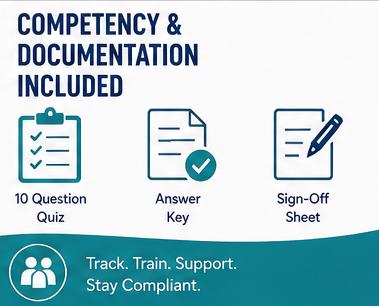
✔️ DSP Competency Quiz (10 Questions)
✔️ Answer Key Included
✔️ Training Sign-Off Sheet
Supports compliance
Tracks staff competency
Why This Training Matters
Catheter-related complications are common and can lead to:
✔️ Urinary tract infections (UTIs)
✔️ Sepsis
✔️Hospitalizations
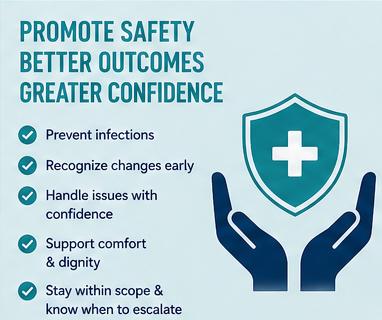
This training helps DSPs:
✔️ Prevent infections
✔️ Recognize problems early
✔️ Provide respectful, dignified care
✔️ Stay within scope and escalate appropriately
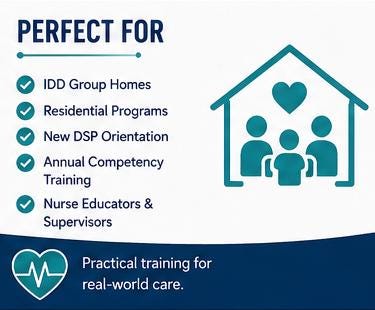
Perfect For:
✔️ OPWDD / IDD Group Homes
✔️ Residential Programs (IRA, CR, ICF)
✔️ IDD Day Programs
✔️ Nurse Educators & Supervisors
✔️ DSP Orientation & Annual Competency
Format
Instant Digital Download (PDF)
Printable + device-friendly
⚠️ Disclaimer
This training is for educational purposes and does not replace nursing oversight, physician orders, or agency policies.